

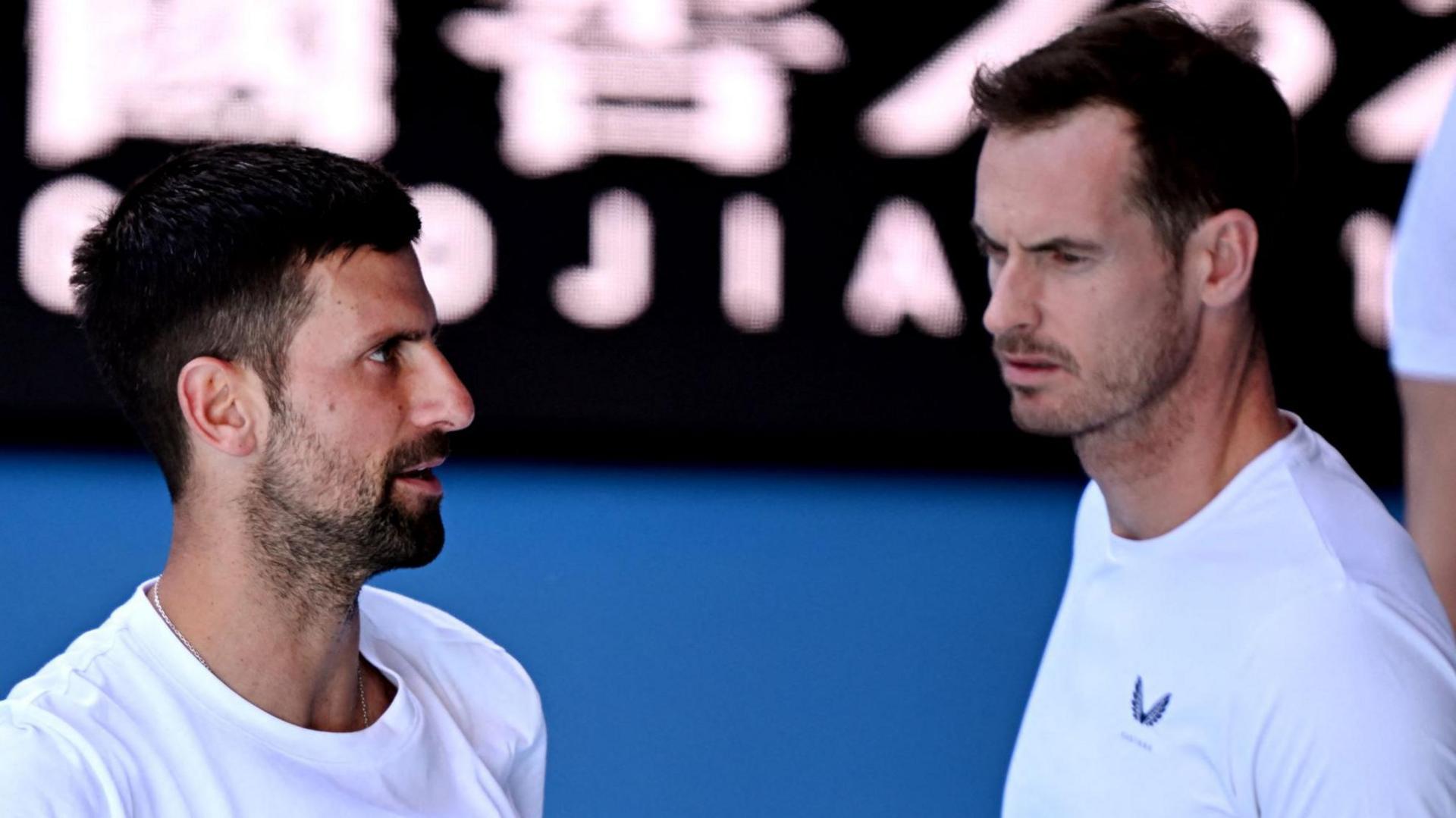
Andy Murray has stated that he "probably didn't get the results I would have hoped for" during his six-month tenure coaching his one-time rival, Novak Djokovic.
Murray, who finalized his illustrious career at the 2024 Paris Olympics, became part of Djokovic's coaching setup last November, but the arrangement concluded after only half a year.
In his maiden coaching role, the 38-year-old Murray partnered with the 24-time Grand Slam champion at the Australian Open in 2025 and three other tournaments.
"It's a job coaching not only one of the best tennis players but one of the best athletes of all time, so my anticipation was that it was going to be exceptionally tough," Murray remarked in an interview.
He continued, "Novak, like myself, is a perfectionist in terms of the way he goes about his tennis, [it] is incredibly rigorous."
Looking Back at the Period
Looking back, Murray conveyed that he is glad he undertook the role. "It's an incredible experience that I've had," he said.
During their time together, Djokovic overcame Carlos Alcaraz to advance to the semi-finals in Melbourne, but was forced to retire injured from his contest against Alexander Zverev.
Subsequently, upon his comeback, Djokovic suffered opening-round defeats in Qatar and at Indian Wells, before losing the Miami Open final to Czech teenager Jakub Mensik.
"It was regrettable what happened in Australia with the injury, but I watched him play sensational tennis in that tournament," Murray said.
"After the injury, it was definitely a difficult few months for him, but also I think for the team and all of us. I was disheartened. Probably didn't get the results I would have liked for him. But I gained valuable insight about what coaching involves."
A Demanding Start and Career Reflections
Murray also shared an anecdote from his first day on the job, when he was told to join Djokovic on a run. He suffered through calf cramps so as not to let down his fellow former world number one—a moment he described as "humiliating."
Reflecting on his own successful playing career, Murray admitted he "should have taken more breaks" to enjoy his successes, including after his two Olympic gold medals.
Perspective Regarding the Tennis Calendar
The conversation shifted to the modern tennis calendar, a topic of concern among top players.
Murray, who was hindered by injuries in his final seasons, had opposed increasing the number of two-week ATP 1,000 tournaments, believing the increased time on the road would be detrimental to players.
"I don't think there's anything that indicates players are getting injured more than before. But I do think players are more tired and worn out mentally than they were before because they're spending more days away on the road," Murray explained.
"When you're more tired, you're more susceptible to pain and discomfort. My belief is that's what players are feeling now, just being away for longer.
"I don't think the matches are so much more taxing than they were 10, 15 years ago. But it's the volume of time that players are away on the road that's genuinely an issue."


